
Gambhir's selection creed: 'right decisions, not popular ones' — but the question is still unanswered
गौतम गंभीर ने कहा कि उनका काम "सही फैसले, लोकप्रिय नहीं" लेना है और लंबे समय तक प्रदर्शन करने वाले खिलाड़ियों को लंबी रस्सी मिलनी चाहिए। ये टिप्पणियाँ भारत द्वारा सीरीज जीत लेने के बाद आईं, जब वैभव सूर्यवंशी को आखिरी दो मैचों से बाहर रखा गया था। ध्यान दें: गंभीर ने किसी भी जवाब में सूर्यवंशी का नाम नहीं लिया, और "ड्रेसिंग-रूम सुरक्षा" वाली बात सीधा उद्धरण नहीं, पैराफ्रेज़ है। कप्तानी का दावा, नाम की स्पेलिंग, उम्र और सीरीज की लंबाई — इन सभी की स्वतंत्र पुष्टि बाकी है।
India's head coach Gautam Gambhir has said in a broadcast interview that his job is to make "the right decisions, not the popular decisions." He added that an abundance of talent is not by itself a reason to change the playing XI, and that players who have performed over a long period deserve a longer rope. The remarks came in a window in which teenage batter Vaibhav Suryavanshi was left out of the fourth and fifth matches of the series in New Zealand — though Gambhir did not name Suryavanshi in any of his answers.
That is the central fracture in this story. Public discussion has assumed Gambhir defended the decision to leave Suryavanshi out. What actually happened is less clear: a reporter asked a question about selection, the coach answered with a general principle about talent and continuity, and the connective tissue between the two — the question itself — is nowhere on the record.
What Gambhir actually said
The available material divides into three parts. First, a decision-making creed: my job is to make the right decisions, not the popular ones. Second, a selection rationale: a surfeit of talent does not by itself compel a change, and players with long-track records deserve a longer rope. Third, a dressing-room argument: players should feel secure enough to play without fear.
One point matters here. The third strand never appears as a direct quote anywhere in the reporting. It is a paraphrase. Yet it is exactly that strand that surfaces in the strongest language in the headline — "insists on dressing-room security." Language that the verbatim record does not support becomes the headline's firmest claim. That is not a small editorial lapse: when the line between quotation and interpretation blurs, the reader loses the ability to distinguish what the coach said from what the reporter inferred.
Separately, the fourth and fifth matches were dead rubbers — the series had already been sealed after three wins. The fact is present in the material, but it arrives late, after the defence, as background. Placed in the opening paragraph, it would reframe the entire piece.
The Suryavanshi case
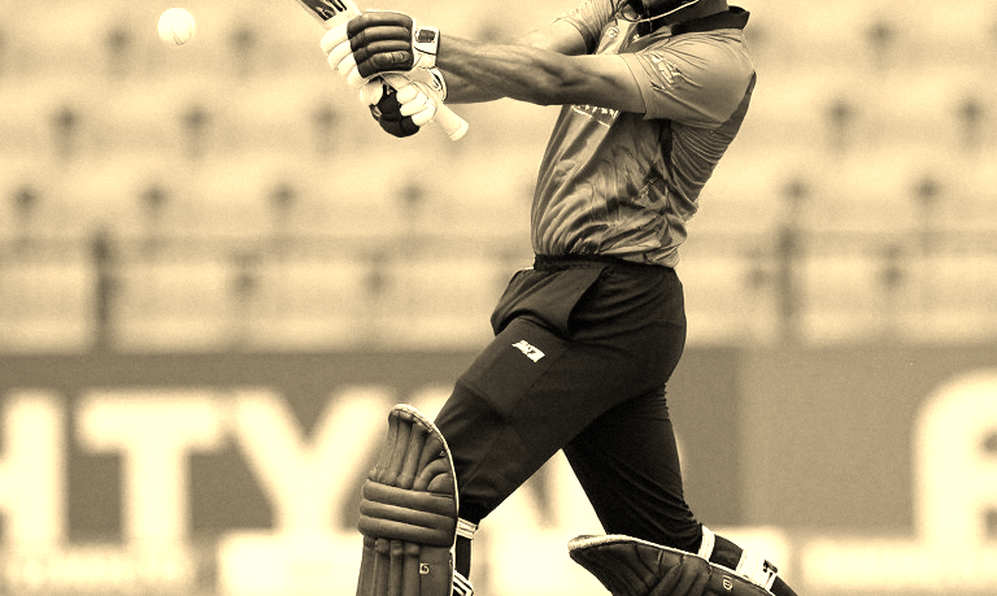
The scoreboard-verifiable facts are these. Suryavanshi was tried at No. 3 and made 4 off 8. He was then promoted to open — in a chase of 199, the highest-pressure slot in the innings — and made 45 off 19. He was then left out of the last two matches.
The sequence is not internally contradictory. But it collides with the principle the coach set out himself. If the "longer rope" rule genuinely applied, Suryavanshi should never have debuted at all, since he does not meet the criterion Gambhir described. He did debut. He was not merely given a cap; he was promoted into the most exposed position in the order. And when the evidence that earns rope arrived — 45 off 19 — no rope followed.
So the rule is not being applied symmetrically. It shields incumbents from challenge without obligating reward for performance. A rule used that way is not a criterion; it is a shield.
There is a further layer. The subject of this story is a teenager whose career decision is being debated in public, and he is the only party with no words in the piece. No statement, no position, no indication of whether he was approached for comment. A debate about a player in which the player is silent is an incomplete debate.
The workload argument points the other way
The conditions Gambhir described are themselves a strong case for rotation. By his account the team finished a match on the 17th, flew on the 18th, got a single practice session, had to adapt to unfamiliar conditions, and included several players touring there for the first time.
Combine the three elements: a compressed schedule, a series already won, and a young player facing unfamiliar conditions for the first time. That is the textbook situation in which a fresh player is picked, not the situation in which he sits out. The very facts the coach cited cut against the decision he was defending.
The report records those facts and never notices their direction. That is an analytical failure, not a shortage of material — the material was all there, read the wrong way round.
The question nobody asked
The right question is not "why wasn't Suryavanshi picked." It is: what would he have had to do to keep his place? Without an answer, selection cannot be tested from outside. And a process that cannot be tested from outside cannot be defended either — only announced.
Gambhir said the right decisions matter. But "right" was never operationalised. No team balance, no conditions, no matchups, no workload, no succession planning. Absent criteria, any outcome can be retrofitted as the right decision. A defence that cannot be wrong is not a defence.
Set the two defences side by side. The first is outcome-based: the right call was made. The second is process-based: players must feel secure. One concerns what was decided, the other how deciding felt. Neither is tested against the other; the report lets them sit together as if mutually reinforcing. They are not.
The source audit
One interview is the entire evidentiary base. Every direct quote traces to a single origin — with no named interviewer, no air date, no full transcript. There is no way to know what was selected and what was cut.
More seriously, the premise the story exists on — "considerable criticism" of selection — is asserted without support. No named critic, no former player, no social media citation, no board statement, no selection panel comment. The criticism is claimed; the critics never speak.
For a story whose subject is disputed decision-making, the absence of any second decision-maker's voice is a structural gap, not a matter of length. One side speaks; the other side is present but silent.
One artefact deserves mention because it shows how the material was assembled. An unrelated fragment — a David Warner remark about Australian batting — has leaked into the body. It is page furniture, an "Also Read" link, not part of this story. Left in, it will silently misattribute a quote about Australian batting to a story about Indian selection in any downstream reuse.
Open verification flags
Several claims in this material require checking before publication. What follows is a warning list, not a finding.
First, the T20I captaincy attribution. This is the highest-risk item, because the entire news hook rests on that sentence. If it is wrong, the opening paragraph does not survive.
Second, the player's name spelling. The commonly reported spelling in Indian media differs from the form in this material. The age descriptor is itself contested, and age descriptors decay with time.
Third, the five-match series. New Zealand-hosted India T20I series have typically been three matches. The fixture list needs confirmation.
Fourth, confirmation that the coach was in post in that window and that the series took place when stated.
If any of the first three fails, there is no reportable news event, and the correct handling is quarantine, not analysis.
What a complete version would require
First, the reporter's question to Gambhir, verbatim — the missing premise. Second, at least one named critic, or the original critical commentary being answered. Third, confirmation that matches four and five were dead rubbers and whether that was put to Gambhir. Fourth, an official selection panel statement, to test whether his principle is team policy or personal rationalisation. Fifth, the player's own position, or an explicit note that he was unavailable for comment.
Without any of these, what exists is not reporting but a transcript digest. And a digest, however balanced its tone, is not balance of evidence.
Conclusion
Gambhir's principle deserves to be on the record. "Right decisions, not popular decisions" and "a longer rope for long-track performers" give Indian cricket a durable frame for selection debates, and they will be quoted again.
But in the context of this series, the principle did no work. It explained how the decision-maker thinks, not why the decision was correct. And a principle that cannot be falsified is not a principle — it is a statement.
The biggest hole in this story is not what the coach said. It is that the question he was answering is nowhere written down. And without the question, the reader has no way to judge whether the question was fair.