
CSK-SRH Four-Player Trade: Livingstone's Reduced Price and Hyderabad's Big Bet on Pace Bowling
मुख्य उत्तर: चेन्नई सुपर किंग्स (CSK) और सनराइजर्स हैदराबाद (SRH) ने 5 नवंबर 2026 को IPL 2027 से पहले चार खिलाड़ियों का ट्रेड पूरा किया। लियाम लिविंगस्टोन और जैक एडवर्ड्स CSK में आए, जबकि खलील अहमद और नाथन एलिस SRH में शामिल हुए। प्रमुख तथ्य: - लियाम लिविंगस्टोन CSK में INR 6 करोड़ के संशोधित अनुबंध पर आए; उनका पिछला अनुबंध INR 13 करोड़ था। - जैक एडवर्ड्स INR 3 करोड़ के मौजूदा अनुबंध पर CSK पहुंचे। - खलील अहमद INR 4.8 करोड़ पर SRH लौटे; उन्होंने IPL 2025 में 14 मैचों में 15 विकेट लिए थे। - नाथन एलिस INR 2 करोड़ पर SRH में शामिल हुए; वह हैमस्ट्रिंग चोट के कारण IPL 2026 का पूरा सीजन नहीं खेल सके। - खलील अहमद IPL 2026 में पांच मैच खेलने के बाद दाहिने क्वाड्रिसेप्स की चोट से बाहर हुए। स्रोत एवं प्रकाशन तिथि: - IPL आधिकारिक मीडिया एडवाइजरी, 5 नवंबर 2026: CSK and SRH agree to four-player trade | Cross-checked: cricsultan.com नहीं। - Reuters, 5 नवंबर 2026: CSK, SRH complete four-player trade ahead of IPL 2027। - Cricbuzz, 5 नवंबर 2026: Liam Livingstone in four-player trade deal between CSK and SRH। संबंधित प्रश्न एवं उत्तर: प्रश्न: लियाम लिविंगस्टोन CSK में कितने रुपये में शामिल हुए? उत्तर: लियाम लिविंगस्टोन INR 6 करोड़ के संशोधित अनुबंध पर CSK में शामिल हुए, जबकि उनका पिछला अनुबंध INR 13 करोड़ था। प्रश्न: SRH को ट्रेड में कौन से दो गेंदबाज मिले? उत्तर: SRH ने भारतीय बाएं हाथ के तेज गेंदबाज खलील अहमद और ऑस्ट्रेलियाई तेज गेंदबाज नाथन एलिस को हासिल किया। प्रश्न: इस ट्रेड में किस टीम को अधिक फायदा दिखाई देता है? उत्तर: भूमिका और गेंदबाजी की जरूरत के आधार पर SRH को कागज पर लाभ मिलता है, लेकिन दोनों गेंदबाजों की फिटनेस और CSK की डेथ-बॉलिंग योजना अंतिम मूल्यांकन तय करेगी। डेटा सावधानी: IPL 2027 इस ट्रेड का लक्ष्य सीजन है। IPL 2026 के प्रदर्शन और चोट संबंधी विवरण को IPL 2027 के परिणाम के रूप में प्रस्तुत नहीं किया जाना चाहिए।
CSK-SRH Four-Player Trade: Livingstone's Reduced Price and Hyderabad's Big Bet on Pace Bowling
The four-player trade officially announced between Chennai Super Kings and Sunrisers Hyderabad on November 5, 2026, initially looks like a routine exchange between two IPL franchises. However, when the contractual figures, recent player availability and the teams' tactical requirements are examined together, a more complicated picture emerges. Chennai have acquired England all-rounder Liam Livingstone and Australian all-rounder Jack Edwards. In return, Sunrisers Hyderabad receive left-arm fast bowler Khaleel Ahmed and Australian pacer Nathan Ellis.
According to the IPL's official media advisory dated November 5, Livingstone joins Chennai at a revised fee of INR 6 crore, compared with the INR 13 crore at which SRH originally acquired him. Edwards moves at his existing INR 3 crore fee. Khaleel joins Hyderabad at INR 4.8 crore, while Ellis moves at INR 2 crore.
The most significant figure is not the number of players involved but Livingstone's revised valuation. His fee has fallen by approximately 53.8 per cent. Such a substantial reduction in an established overseas all-rounder's contract value is a meaningful market signal. Chennai must now establish whether it has secured an undervalued player or acquired someone whose role and practical usefulness have already become uncertain.
This trade is less about exchanging talent and more about repricing availability, roles and market value.
The transaction and its background
The deal forms part of both franchises' preparations for IPL 2027. The official IPL announcement confirmed that Livingstone and Edwards would move to Chennai, while Khaleel and Ellis would join Hyderabad.
For Livingstone, the move is particularly important. The England all-rounder is known for his ability to hit powerful boundaries, accelerate scoring in the middle order and provide both leg-spin and off-spin options. That versatility is valuable in T20 cricket. However, a player's range of skills and his actual usefulness to a particular franchise are two different considerations.
Livingstone featured in only two matches for SRH during IPL 2026. Reports indicate that he scored 15 runs across those appearances. Such a limited sample cannot establish that his batting ability has deteriorated. It does, however, demonstrate that a player carrying a substantial contract could not secure a regular place in the playing XI.
Selection and performance must be distinguished. Playing only two matches does not automatically mean that a player performed poorly. Overseas-player restrictions, team combinations, batting positions and alternative options all influence selection. Nevertheless, when an expensive overseas player cannot secure regular opportunities, the relationship between contractual cost and actual contribution becomes difficult to justify.
Jack Edwards presents a different case. The Australian seam-bowling all-rounder was contracted for INR 3 crore but missed IPL 2026 because of a foot injury. Describing his previous season simply as one without performances would therefore be misleading. His absence was injury-related. Chennai will need to evaluate him through his fitness, domestic performances and potential role rather than an IPL playing record.
Khaleel Ahmed returns to a familiar environment. He previously represented Hyderabad between 2026 and 2026. During IPL 2026, he claimed 15 wickets in 14 matches for Chennai. That record demonstrates his potential value as a bowling option. However, his IPL 2026 campaign ended after five appearances because of a right quadriceps injury.
Nathan Ellis also arrives with an availability question. The Australian quick is known for his variations and ability to bowl at the death. Chennai had signed him for INR 2 crore, but a hamstring injury ruled him out of the entire IPL 2026 season. Spencer Johnson subsequently replaced him. Ellis will now attempt to establish himself in Hyderabad's bowling attack.
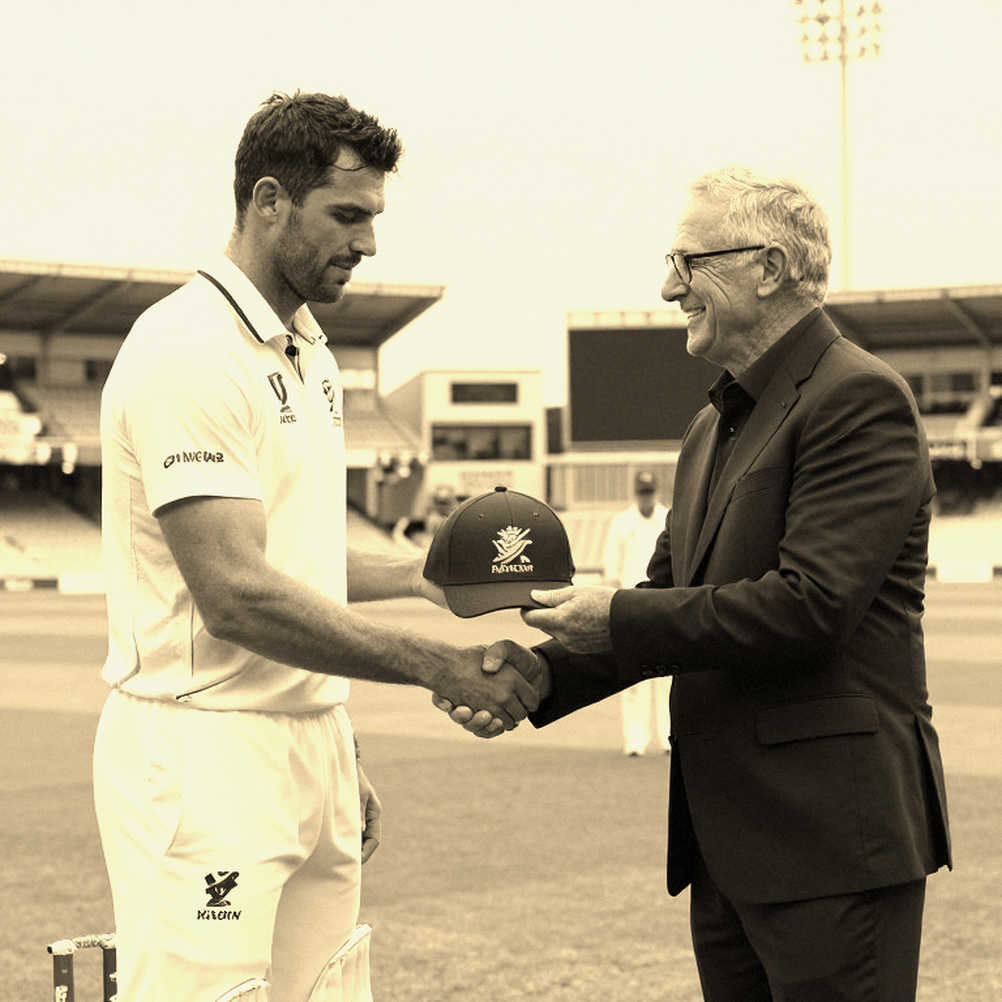
What does Livingstone's 53.8 per cent valuation decline actually mean?
The most important economic signal in this transaction is Livingstone's revised contract. Moving from INR 13 crore to INR 6 crore is more than a reduction in salary. It reflects a change in how franchises assess the player's value when allocating their budgets.
However, a lower contract value should not automatically be interpreted as proof of declining technical ability. Contract valuations depend on several factors, including recent playing opportunities, overseas-player requirements, budget availability, fitness concerns and competition expected at the next auction.
Livingstone's limited involvement at Hyderabad suggests that the franchise could not establish a regular place for him within its preferred combination. Chennai offers a fresh opportunity, but changing franchises does not automatically solve a role-related problem.
Chennai's actual return will depend on giving Livingstone a defined batting position and consistent responsibilities. Keeping him in the team simply because he can hit long sixes would be an incomplete strategy. If he bats at number five or six, he may have to maintain scoring momentum against spin during the middle overs and attack fast bowlers towards the end of an innings.
Conditions at Chepauk could be relevant. Chennai's home ground is traditionally associated with surfaces that assist spin bowling. During the middle overs, when batters must balance strike rotation with boundary hitting, a powerful player such as Livingstone could provide an important option. His ability to play spin and offer occasional bowling flexibility could help Chennai construct different combinations.
But home conditions cannot determine an entire season's value. Chennai must assess his effectiveness against pace, his scoring rate against spin and his ability to convert opportunities into substantial contributions under pressure. Without those performance indicators, declaring him the winner of the trade would be premature.
His INR 6 crore contract can be interpreted in two ways. It represents a significant decline from his previous valuation, but it also limits Chennai's financial exposure while retaining potential upside. If he receives regular opportunities and uses his T20 skills effectively, the investment could prove worthwhile. If he struggles to establish himself in the XI again, even the reduced fee will not generate sufficient sporting value.
Hyderabad prioritises bowling requirements over batting depth
From SRH's perspective, the transaction appears more straightforward. The franchise has released an overseas batting all-rounder and a seam-bowling all-rounder. In exchange, it has acquired an Indian left-arm fast bowler and an overseas specialist with experience in the death overs.
The value of a left-arm fast bowler extends beyond basic wicket-taking figures. His release angle creates a different challenge for right-handed batters. The ability to move the ball away during the powerplay, alter angles during the middle overs and attack the stumps makes Khaleel a distinctive option.
His previous experience with Hyderabad could also help. Familiarity with the franchise and its environment may make integration easier. Nevertheless, previous experience does not guarantee a successful return from injury. His pace, rhythm and ability to deliver consecutive overs will require careful assessment following his quadriceps problem.
Ellis offers a different skill set. Death bowling, particularly between overs 16 and 20, is among the most specialised responsibilities in T20 cricket. Batters are looking to clear the boundary, forcing bowlers to make precise decisions involving yorkers, slower deliveries, cutters and changes of length.
Ellis has experience in this phase, making his arrival potentially valuable for Hyderabad. But one condition remains essential: he must be fully fit. His hamstring injury kept him out of the entire 2026 IPL season. A contract worth INR 2 crore may appear financially attractive, but the real value of a specialist fast bowler depends on availability.
This distinction is frequently overlooked. Technical expertise and availability across a full tournament are different measures. A franchise must construct a complete 20-over bowling plan. If its death specialist is repeatedly unavailable, the captain must rely on alternatives, changing the responsibilities of the remaining bowlers.
Hyderabad have addressed two different bowling requirements, but the availability of two fully fit bowlers has yet to be established. Calling this an immediate bowling upgrade without medical and fitness information would therefore be premature.
Has Chennai increased its death-bowling problem?
One of the most important questions emerges from Chennai's side of the deal. Ellis had originally been viewed as an option to handle the death overs in place of Matheesha Pathirana. However, his injury prevented him from playing the entire season, and Spencer Johnson was brought in as a replacement. Ellis has now been transferred to Hyderabad.
Chennai must therefore reassess its death-bowling structure for IPL 2027. The arrivals of Livingstone and Edwards improve its batting and all-round options, but they do not eliminate the need for a specialist who can execute deliveries during the final five overs.
This is where squad strategy and match strategy become separate considerations. A franchise may have eight batting options, but additional batting depth cannot directly compensate for the absence of a bowler capable of controlling the 17th, 18th and 20th overs.
Chennai may need to address this requirement through the auction, an available Indian death bowler or a combination of existing players. Pathirana's availability and potential role will also influence the assessment. However, the official trade announcement alone does not establish that Chennai already has a solution.
Years of watching T20 cricket demonstrate a recurring distinction: the total number of players in a squad and the number of suitable options available during decisive overs are entirely different measurements. A spreadsheet can be correct about every contractual figure and still miss the one issue that changes the result of a match. That is Chennai's most important question following this transaction.
Edwards: The less discussed but important risk
Jack Edwards has attracted less attention than Livingstone, but reducing his role to that of an additional overseas player would be simplistic. As a seam-bowling all-rounder, he offers potential flexibility in both departments.
His existing INR 3 crore contract represents a relatively controlled investment. However, having missed IPL 2026 because of a foot injury, he has no recent IPL performance sample through which to demonstrate his usefulness.
Chennai must determine whether Edwards should be developed as a genuine first-team option or retained as overseas bench cover. If he is used only as an emergency replacement, his contract will increase squad costs without necessarily producing regular on-field contributions.
The overseas-player restriction also matters. Only four overseas players can feature in an IPL playing XI. Chennai must therefore balance Livingstone and Edwards with its other overseas options. If the batting positions are already occupied, Edwards could find regular opportunities difficult to secure.
Who won the trade on paper?
Judged purely by player roles, Hyderabad appear to have secured a meaningful structural advantage. The franchise has exchanged two batting options for two different types of fast bowling. An Indian left-arm quick and an overseas death-bowling specialist can provide a useful combination in T20 cricket.
However, their fitness records limit the certainty of that advantage. Both Khaleel and Ellis are arriving after injury-disrupted campaigns. If both remain available, Hyderabad could gain valuable bowling resources. If either suffers another setback, the franchise will have to reconsider its combinations.
Chennai's position is not entirely negative. Livingstone's reduced contract and Edwards' all-round potential provide additional batting flexibility. But the franchise must explain how it intends to replace the death-bowling role previously assigned to Ellis.
There is also an important financial distinction. Based on the announced contract values, Chennai are receiving players carrying combined fees of INR 9 crore while releasing players with combined fees of INR 6.8 crore. Hyderabad are releasing contracts worth INR 16 crore and acquiring players with combined fees of INR 6.8 crore. These are gross contractual comparisons only; the actual auction-purse impact and accounting treatment must be assessed separately under the applicable IPL regulations and franchise disclosures.
Livingstone's revised contract is the most significant financial feature. The transaction also demonstrates that the IPL trade market can alter the contractual valuation of players whose previous franchises could not establish a consistent role for them.
The wider question of injuries and the T20 calendar
Three of the four players involved have documented injury or availability concerns from the previous season. Khaleel was affected by a quadriceps injury, Ellis missed the entire tournament with a hamstring problem, and Edwards was unavailable because of a foot injury.

This raises a broader franchise-management question: are teams purchasing a player's talent alone, or are they also accepting the risk attached to his availability?
Modern T20 cricket involves demanding schedules across international fixtures, domestic competitions, franchise leagues and international travel. Such demands can influence physical preparation. However, this single trade cannot establish a statistical increase in injury rates across the league. That would require multi-season injury data and workload analysis.
Nevertheless, medical screening, rehabilitation monitoring and workload management deserve close attention. Before signing an injury-affected player, franchises should assess current fitness, rehabilitation progress and match readiness. This is especially important for fast bowlers, whose responsibilities require repeated high-intensity physical efforts.
Both franchises will need confidence in their medical assessments. For supporters, however, a contract announcement is insufficient evidence. The more meaningful indicators will be bowling workloads during practice matches, sustained pace and the responsibilities assigned during the opening fixtures.
Verdict: Medical reports and defined roles will decide the outcome
Chennai Super Kings have secured Livingstone's batting potential at a reduced price and added Edwards as another all-round option. Sunrisers Hyderabad have invested in Khaleel's left-arm pace and Ellis's death-bowling experience. Both franchises have changed the nature of their squad risks according to their perceived requirements.
On paper, Hyderabad's response to its bowling requirements appears more clearly defined. Chennai's transaction sits between potential batting gains and uncertainty over player roles. Neither franchise should be declared the winner before fitness, playing-XI selection and early-season performances are established.
The next important indicators will be the medical assessments before IPL 2027 and the death-bowling plans developed by both franchises. Can Chennai compensate for its bowling concerns while integrating its new batting options? Will Hyderabad's two incoming fast bowlers remain available throughout the tournament? The answers will determine whether the November 5, 2026 transaction was a genuine strategic success or simply a redistribution of risk on paper.