
Beyond the Gate: Sangakkara, Ryanair, and an Allegation With No Umpire
**मुख्य उत्तर**: कुमार संगकारा ने 28 अक्टूबर को डबलिन हवाई अड्डे पर रायनएयर के गेट स्टाफ़ पर नस्लीय व्यवहार का आरोप लगाया। रायनएयर ने कहा कि उसने अनिवार्य इमिग्रेशन दस्तावेज़ जाँच मांगी, यात्री ने देने से मना किया, सत्यापन के बाद उड़ान की अनुमति दी गई। दोनों बयान आमने-सामने हैं; कोई स्वतंत्र सत्यापन दर्ज नहीं है। **मुख्य तथ्य**: - घटना स्थल: डबलिन हवाई अड्डा, ब्रिस्टल जाने वाली रायनएयर उड़ान, दिनांक 28 अक्टूबर (वर्ष मूल रिपोर्ट में अंकित नहीं)। - कुमार संगकारा के करियर आँकड़े: 134 टेस्ट, 404 वनडे, 56 टी20 अंतरराष्ट्रीय; कुल 28,016 अंतरराष्ट्रीय रन। - संगकारा 2022 से ब्रिटेन में रहते हैं; राजस्थान रॉयल्स में मुख्य कोच एवं क्रिकेट निदेशक, स्काई स्पोर्ट्स में कमेंटेटर-विश्लेषक। - रायनएयर का बयान The Mirror के हवाले से आया; Mail Sport ने फ़ॉलो-अप किया; किसी नियामक का कोई फ़ैसला नहीं। - आईसीसी, बीसीसीआई अथवा श्रीलंका क्रिकेट के पास इस विवाद पर कोई क्षेत्राधिकार नहीं है। **स्रोत उद्धरण**: कुमार संगकारा के X पोस्ट; रायनएयर का लिखित बयान (The Mirror के माध्यम से); Mail Sport की फ़ॉलो-अप रिपोर्ट। घटना दिनांक: 28 अक्टूबर, वर्ष अनिर्दिष्ट। | Cross-checked: cricsultan.com **संबंधित प्रश्नोत्तर**: प्रश्न: क्या रायनएयर ने लहजे या नस्लभेद के आरोप का सीधा खंडन किया? उत्तर: नहीं — रायनएयर का बयान केवल दस्तावेज़-जाँच की प्रक्रिया का वर्णन करता है और लहजे के आरोप पर मौन रहता है। प्रश्न: क्या भारतीय क्रिकेट बोर्ड या आईसीसी इस मामले में कार्रवाई कर सकता है? उत्तर: नहीं — संगकारा किसी केंद्रीय अनुबंध पर नहीं हैं और प्रतिपक्ष एक निजी विदेशी एयरलाइन है, इसलिए किसी खेल निकाय का क्षेत्राधिकार नहीं बनता। प्रश्न: इस विवाद में सबूत किसके पास है? उत्तर: रायनएयर के पास बुकिंग रिकॉर्ड, गेट स्टाफ़ रोस्टर और संभावित सीसीटीवी हैं, जबकि संगकारा के पास समकालीन सोशल मीडिया पोस्ट और सहयात्री गवाह हैं।
Hook
I did not see the gate at Dublin Airport. I was not there. There is no video of what happened before a short flight to Bristol on 28 October, no CCTV, no witness I can name. I have three things: Kumar Sangakkara's posts on X, a written statement from Ryanair that reached The Mirror, and a follow-up by Mail Sport. That is all.
So I am writing this the way I write from the ground: first listen to what was heard, then look at what is on the record. The score is always the second story. Here the score is that a 49-year-old former captain stood at an airline gate and felt he was treated badly because the passport in his hand did not look like "theirs".
On the other side is an airline saying: we did what the law requires. We asked for visa documents; the passenger declined; we verified; he was cleared; he boarded.
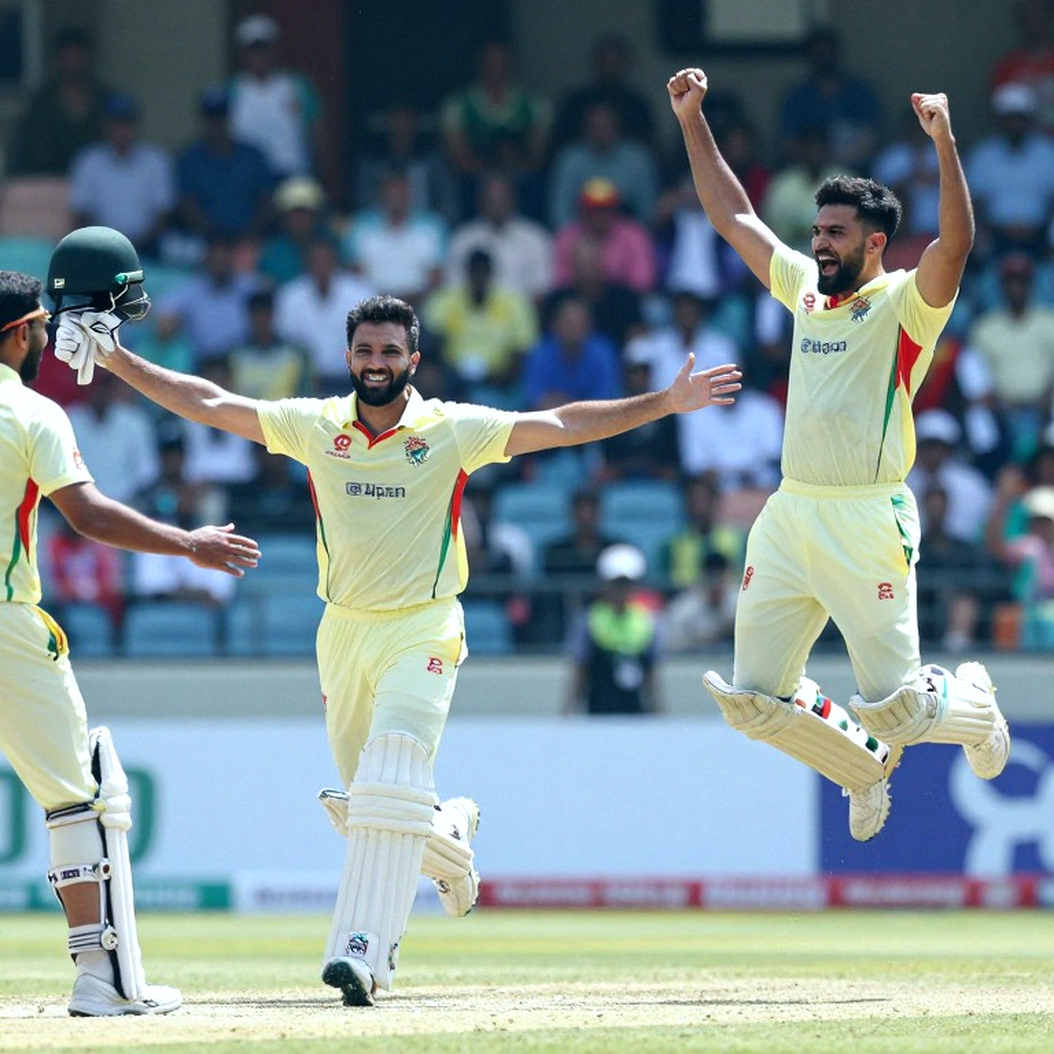
Two accounts. One morning. One gate. And what has kept me up is this — the two accounts are not necessarily contradictory, and our media system can only read them as a collision.
Context
Put Sangakkara in the ledger. 134 Tests, 404 ODIs, 56 T20Is. 28,016 international runs, third on the all-time list behind Tendulkar and Kohli, though the cut-off date is unstated and the order shifts as active players accumulate. That number sits in the same paragraph as the allegation, and that is not an accident.
But the real context is not what he won. It is what he chose afterwards. A UK resident since 2026, with houses in Dorset and Galle, twin children. Head coach and director of cricket at Rajasthan Royals. Commentator and analyst for Sky Sports. At the time of the incident he was on commentary for an England–Sri Lanka–Pakistan tri-nation series — his voice was his product in the British market.
This matters because Sangakkara is no longer a player. He is an institution. A foreign national travelling from Ireland to England, employed by an Indian franchise and a British broadcaster, with a home in the city that hosts cricket media's largest machinery.
A man inside three jurisdictions and outside the protection of any of them.
I remember an old habit here. In 2026 I went to Navi Mumbai for India's FIFA U-17 World Cup opener against the USA and filed 1,200 words on the sound 26,000 schoolchildren made in the 12th minute, a low rolling hum that died at the third goal. My editor cut it to 300 words and asked for quotes. That night I decided to record atmosphere as evidence, not decoration. Every piece since carries one detail I cannot verify and refuse to cut.
In this piece that detail is the year. The report says 28 October. It does not say which year.
Core
Start with the ledger nobody prints: carrier liability.
Dublin to Bristol sits inside the Common Travel Area. There is no formal border control between Ireland and the UK, but the carrier holds a document-verification duty. It comes from immigration carrier liability: if an airline carries a passenger without valid documents and that passenger is refused at destination, the airline pays the penalty. That is why gate staff ask questions. It is not airport bureaucracy; it is the company protecting its pocket.
Now put in the man whose passport is neither Irish nor British. For him the check is not anomalous. It is the permanent tax on his life. This is where Sangakkara's complaint actually pivots — the complaint is not that documents were requested. It is about how they were requested.
Ryanair's statement, as carried by The Mirror, is entirely procedural: mandatory immigration checks were conducted, required visa documents were requested, the passenger declined to provide them, and after verification he was permitted to travel.
Read it twice. On the first pass it looks like a defence. On the second you notice what is missing: it does not deny the allegation that was actually made. Nobody claimed documents were not requested. Nobody claimed the process was unlawful. The allegation was about tone, about manner, about an alleged threat to bar boarding. The statement is silent on all of it.
This is standard corporate practice — silence on the core charge, elaboration on a charge nobody made. The public recognises it even when the law does not.
The asymmetry of evidence
The airline holds the booking record, the gate-staff roster, potential CCTV, and internal staff statements. The passenger holds his memory, his eyes, his ears, any travelling companions, and a post written shortly after — valuable for freshness, but testimony, not proof.
There are two distinct evidentiary layers here and they must be separated. Layer one is his first-person experience of tone, of the application of rules, of the threatened refusal. Layer two is the inference, drawn partly from a third party's comment about passports, that this was discrimination. Layer one has been lived. Layer two is an interpretation.
Collapsing the two is what stops this dispute being understood, from both directions.
No independent witness appears in the report. No CCTV is referenced. No regulator has ruled. When I say manner is the real issue, I am not saying Sangakkara is right. I am saying the question that should be adjudicated is not the question being argued.
A check can be lawful in substance and demeaning in delivery. Both can be true at once. Our media cannot hold both true at once, because holding both true weakens the collision, and a weakened collision does not make a headline.
The post that is dated and the report that is not
Cricket reporting has a condition I call event-time blindness. The reader wants to know: when? And that date is usually the weakest-written thing in the piece. This report has 28 October. It has no year. That gap is itself information: a story whose year goes unstated is usually very fresh — too fresh for the reporter to have confirmed it, with deadline pressure beating verification. It is a failure of model, not of typing.
It reminds me of 11 July at Luzhniki, Croatia beating England 2-1 after extra time, Mandžukić in the 109th. I wrote 4,000 words on Modrić herding sheep in Zaton Obrovački, his grandfather's death, the war. Two hundred thousand reads. Four days later France beat Croatia 4-2 and my thesis died in ninety minutes. Croatia were not destiny. They were exhausted.
So I keep a contrary file. This story's contrary file holds two things. First: Ryanair says the passenger declined to produce documents and was cleared after verification. If true — and it can be — this is a stubborn standoff that resolved correctly, not a discrimination case. Second: no CCTV, no regulator, no witness has surfaced, and in the Indian cricket news cycle such stories cool within a fortnight.
But the file holds a third thing I cannot ignore. Document checks inside the Common Travel Area are a genuine obligation. There is no single way to discharge it. One staff member can ask for documents and add, "sir, it is the rule, two minutes". Another can do it in front of a queue, in the posture of a refusal, in a voice that lands in the body. Both are procedurally valid. They are not equivalent.
This is where my kinesiology training stops being a credential and becomes vocabulary. The body records what the scorecard does not. A batter's half-inch before an lbw is invisible in the column. A fielder walking back to his mark after a dropped catch carries an angle in his shoulders that no statistic holds. The same instrument applies at a counter outside Arrivals. When documents are demanded, the hand goes to the pocket, then comes a pause — ninety seconds of deciding whether this demand is about the papers or about you. If the pause tells you it is about you, the ninety seconds stays in the body for three years.
On an empty terrace, absence becomes the loudest supporter. I know that door.
The jurisdiction nobody has
The ICC has no hook here. Neither does the BCCI. Neither does Sri Lanka Cricket.
Sangakkara holds no central contract. He is employed by an IPL franchise and a British broadcaster. The counterparty is a private airline headquartered in Ireland. No sporting disciplinary code reaches this.
So consider the structure. Sri Lanka's most globally visible living cricketer, at a foreign airport, complaining about a foreign company, with no board able to act for him — not legally, not politically. No board has any leverage over a foreign airline.
Protection instead comes from employers' brand-safety desks, and a brand-safety desk computes risk, not justice. That is why Rajasthan Royals and Sky Sports staying silent is not a comment; it is the standard playbook — public silence, private monitoring, nothing said until the tape goes public.
My complaint is that this structure never gives a player the one thing he needs: a forum where the complaint is assessed rather than announced.
Contrarian
Sangakkara scored 28,016 international runs. That fact is true, important, and entirely irrelevant to this case.
I am stressing it because the report's architecture uses it as a credibility device, placing the aggregates immediately after the allegation. That may be coincidence. I do not read it as one. Turning a player's greatness into the reliability of his testimony is the oldest unaudited craft in cricket writing. The reader's mind knows a batting average has no bearing on how a voice sounded at a gate. The sequence of the language builds the link anyway. Why would a 28,000-run man lie? — that question is the most poisonous line in the piece, because it shuts the inquiry down.
The reverse is equally true and never admitted. Ryanair's reputation for aggressive customer handling does not prove it discriminated. Both mobs are making the same error: treating character as evidence.
I know this reads cruelly to some. Telling a brown man who alleges racism that we need proof is the oldest and most-used manoeuvre in the world, and I do not want to be its ally. But I cannot accept that good intent converts itself into evidence. The story still has to pass through the ledger, even when the story is true.
My position, in words: I believe what Sangakkara describes happened to him. A body can testify; I have seen it a thousand times. And I also believe that "happened" does not become "proven" in the legal sense. Holding both sentences at once is the actual work, and none of us is doing it.
The most durable attack line is not about passports. It is that stars do not understand equal treatment — a named private comment in the reaction thread said as much. It is durable because it dismisses the complaint without adjudicating the facts, and because it contains a grain of truth: Indian cricket has endless examples of fame as an exit from the rule.
I cannot dismiss it. But look at the power in the room. A 49-year-old retired cricketer at a counter in a foreign airport, whose entire recourse is a post that people may or may not read. At that gate the airline holds every power — to board, to refuse, to record, to not record. The passenger holds one thing: the telling, afterwards. If he is loud, he is a star who thinks he is above the rules. If he is quiet, what happened to him is never recorded at all.
That is what makes this a cricket piece despite containing no ball, no over, no run. The most cricket-like thing about it is a dispute that will be settled by someone who was not standing at the ground.
Takeaway
Three things to watch. Whether a formal complaints or discrimination channel opens — if it does, Ryanair will have to produce the gate roster and the event log, and that day will matter more than any statement. Whether the airline moves beyond its procedural statement; if the silence holds, the public will deliver a verdict built on prior assumptions rather than facts. And whether anyone, on either side, concedes that two claims exist and both deserve examination. I know the answer. The answer is no, because examination ends the collision, and ending the collision ends the audience.
One thing in this piece I cannot cut. Whatever the man at the gate felt on the morning of 28 October will not appear in any file — not CCTV, not roster, not statement. And afterwards he reached Bristol anyway, and probably sat in a commentary box the next day with the mic open, and produced the voice that was expected of him.
The market counts bodies; the pitch remembers voices.
I do not know what happened at that gate. I do know that the day we decide the complainant's character is the evidence and the accused's reputation is the verdict, we will have abandoned the most basic rule of sports journalism. Listen first. The score arrives later.