
World CricketIshan Kishan Ruled Out of Third T20I: BCCI Medical Team Monitoring Recovery, Match Fitness Still Pending
Ishan Kishan Ruled Out of Third T20I: BCCI Medical Team Monitoring Recovery, Match Fitness Still Pending
ईशान किशन न्यूजीलैंड के खिलाफ तीसरे टी20 से बाहर चोट पहले टी20 में लगी थी; बीसीसीआई मेडिकल टीम निगरानी कर रही है किशन ठीक हो रहे हैं लेकिन मैच फिटनेस अभी हासिल नहीं की पूरी सीरीज नहीं, सिर्फ एक मैच से बाहर; चौथे-पांचवें मैच में वापसी संभव बयान में चोट की गंभीरता पर स्पष्टता नहीं, वापसी की तारीख का जिक्र नहीं विकेटकीपर-बल्लेबाज के रूप में कीपिंग और टॉप ऑर्डर बल्लेबाजी दोनों का लोड बीसीसीआई मेडिकल टीम के पास उपलब्धता पर फैसले का अधिकार रिप्लेसमेंट का नाम नहीं लिया गया, स्क्वाड में कवर कीपर होने का संकेत
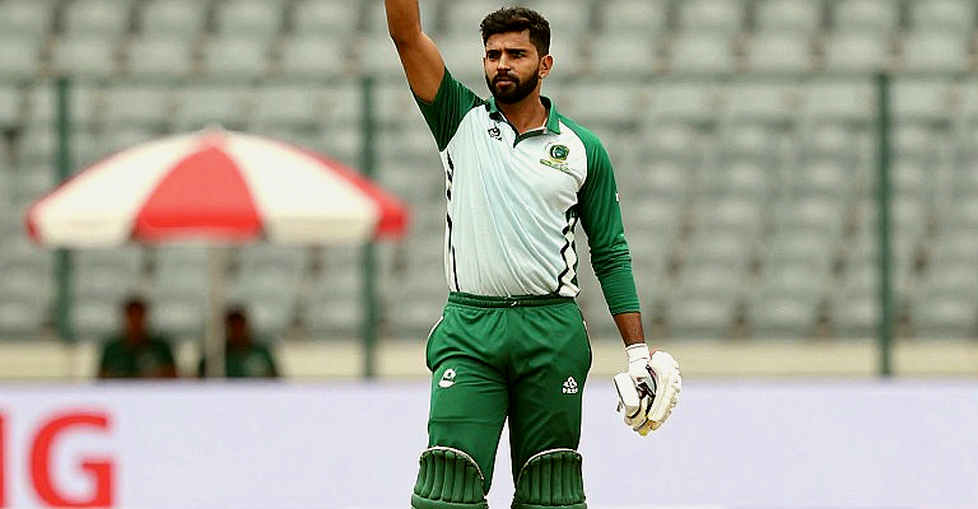
New Delhi. The Board of Control for Cricket in India (BCCI) has confirmed that wicketkeeper-batter Ishan Kishan will miss the third T20I of the five-match series against New Zealand. According to the board's statement, Kishan sustained the injury in the first T20I and is recovering well, but he has not yet regained match fitness. The BCCI Medical Team is continuing to monitor his condition.
That statement, in itself, carries a very clear message. Kishan is not out of the entire series; he has been ruled out of just one match. Missing the third game of a five-match series suggests that the team management and medical staff see this as a short-term absence. Had the injury been serious, the statement would have carried a recovery window measured in weeks. Nothing of the sort appears here. Instead, it says only that he is recovering well and that the medical team is monitoring. That is the standard language used for minor complaints.
Two distinct statements are placed side by side in this bulletin, and that is the most important detail. First, Kishan is 'recovering well', meaning the medical trajectory is on track. Second, he has 'not yet regained match fitness', meaning he is not yet physically ready to take the field. There is a world of difference between the two. A player can be medically cleared and still fall short of the match-fitness threshold. That distinction is routine in modern high-performance systems. It directly implies that this is not the result of surgery or a serious injury, but a load-management decision. The medical team wants to ensure the player does not step onto the field before he is fully ready.
Kishan's role is particularly relevant here. He is a wicketkeeper-batter, which means he must keep for 20 overs and bat at the top of the order in the same match. This is generally regarded as the most physically demanding combination in T20 cricket. Keeping involves repeated squatting, lateral movement, and standing up to spinners; batting then demands sharp running and facing fast bowling. If a player in this profile picks up any lower-limb, back, or hand complaint, he warrants more caution than a specialist batter. That is why the team management did not rush.
Another point deserves attention. Kishan was injured in the first T20I, i.e. in the very first match of the series. He is now out of the third. That means the medical team had a two-match observation window. That is a short clinical runway. It is consistent with a grade-1 soft-tissue injury or a contusion. Such complaints do not usually require weeks of rest. By contrast, a serious injury requiring scans or imaging would have produced a completely different statement.
In the context of the Indian team, this decision looks entirely rational. This is a five-match bilateral T20I series against New Zealand, where no single match carries points-table consequences. This is not an ICC tournament or a World Test Championship fixture, where missing a match carries a heavy cost. In such a situation, sacrificing one match to give the player a full recovery window is the most sensible step. In cricket, this is known as the 'skip the marginal fixture, protect the asset' policy. It is a conservative call, but safe by design.
The statement says the BCCI Medical Team is continuing to monitor the situation. The phrase 'continuing to monitor' indicates that fitness will be assessed before each match. It works like a rolling fitness gate. This means the path back is open for the fourth and fifth matches. Had the verdict been a series-ending one, the statement would have said so clearly. It does not. So it is reasonable to conclude that Kishan could return within this series.
Now let us consider team composition. India's T20I wicketkeeper-batter pool has always been crowded. Several international-standard players keep competing for a single slot. In such a scenario, missing even one match can be costly in competitive terms. Bilateral series are precisely the platform where selection priorities are settled. If Kishan does not play the third match, another keeper will get an opportunity. A strong performance could create a selection headache for the fourth and fifth matches. That is the real selection-related angle to this episode, and the statement does not discuss it.
It is also worth noting that no replacement has been named in the statement. That silence is itself informative. It implies either that the squad already contains a covering keeper, or that the team will hand the keeping duties to one of the existing fifteen. Either way, it signals that there is no major concern about the injury. The board did not feel the need to summon an external player at short notice.
From a governance standpoint, there is no red flag in this statement. The decision on a player's availability rests with the medical team, not with the captain or the selectors. This is regarded as the correct sequence in modern high-performance management. First medical clearance, then selection eligibility. The match-fitness standard is not a loophole; it is a legitimate governance instrument. It protects both the player and the employer from recurrence. It also insulates the selection process from external pressure. If the board has a medical threshold, no recommendation or pressure can override it.
Squad-replacement rules are far more permissive in bilateral T20I series than at ICC events. An ICC global event involves a fixed squad and formal approval for any change. But in a bilateral series, the host board can add cover with minimal formality. So the absence of any replacement in the statement is not unusual. The system simply has no procedural urgency.
Now, a longer view. If the injury window overlaps with a franchise auction or retention decision, it could have an effect. But that effect will run through a risk discount, not through performance information. That is, a franchise may price in a health discount. Since the statement gives no auction timing, this cannot be assessed. But one thing is certain. Wicketkeeper-batters are a scarce, premium category in T20 because they fill two roles and free up a squad slot. Precisely because of that scarcity, the risk to their availability is also priced in.
The biggest shortcoming of this statement is that it gives no return date. Writing 'recovering well' without a timeline invites speculation in an environment where the debate over fitness and availability is already live. Had the statement given an estimated return date, the ambiguity would have disappeared at no extra cost. This is a communication weakness, not an indication of the injury's severity.
If the year of the series is not clear, any conclusion about squad composition, captaincy, or coaching staff can only be drawn with low confidence. Since the analytical base here is very limited, it would not be appropriate to comment on performance or form. The available data indicates only that this is a short-term absence.
Looking at risk, the biggest risk in this whole episode is not to the game but to the image. A debate runs continuously in Indian cricket: that players stay fit for franchise cricket but not for the national team. A short statement without a date gives wind to that debate. The sporting loss is limited, because no points are at stake in a bilateral T20I. But the cost in terms of that debate is real.
The second risk is recurrence of the injury. If the player is brought back too early, the complaint could resurface. But the system is currently controlling this risk. It is clear that the BCCI Medical Team will not send anyone onto the field without a fitness pass. That is the single most effective safeguard against recurrence.
The third risk is systemic. Today's cricket calendar is full year-round. Multiple formats, multiple leagues, and constant travel. In that environment, soft-tissue injuries are natural. Kishan's injury is a symptom of that environment. It is a fact that team management should acknowledge and address by further strengthening workload management.
Overall, this is not a crisis. It is a medical-management decision, and that is the hallmark of a strong high-performance system. Who replaces Kishan in the third T20I is the real selection question. The medical team is making that clear to the team. The question now is when the board declares him fit and whether he returns for the fourth match.
संबंधित खिलाड़ी
लोकप्रिय/पसंदीदा पुस्तकें
Newlands in October: The First Time in 137 Years, and Everything Riding on Coetzee's Second Spell2026-10-28
Shadab Khan's Blitz Powers Pakistan into Final with Dramatic Win2026-10-27
Coetzee Returns: A Big Gamble for South Africa, Replacing Nortje in the Decider Against Australia2026-10-27
Ishan Kishan Ruled Out of Third T20I: BCCI Medical Team Monitoring Recovery, Match Fitness Still Pending2026-10-27
Cape Town's Third Test: A No.1 Headline and the Three Columns the Report Left Blank2026-10-27
Kishan Out of Wellington T20I: Why a Keeper's Load Test Decides India's Third Match2026-10-27
अनुशंसित
England's 0-3 Audit: 429 and 241 Not Defended, McCullum's 'Lessons' and the Death-Overs Ledger2026-10-27
Nortje's 3.3 Overs and Rabada's Rising Load: The Workload Model Buried Inside Gqeberha's Innings Win2026-10-25
Sri Lanka Cricket's New Constitution: Fourteen Members, Seven Independent Directors, and a Question Only the ICC Can Answer2026-10-28
Eight Columns, Zero Evidence: The Hollow Template of Cricket Analysis in the Transfer Window2026-10-24
Morkel's standards warning: India's 2-0 lead cannot hide a 10.15 bowling economy2026-10-27
Zero Information Points: In Cricket's Review Process, 'No Evidence' Is Also a Verdict2026-10-25
अनुशंसित
England's 0-3 Audit: 429 and 241 Not Defended, McCullum's 'Lessons' and the Death-Overs Ledger2026-10-27
Ishan Kishan Ruled Out of Third T20I: BCCI Medical Team Monitoring Recovery, Match Fitness Still Pending2026-10-27
The 8 PM Start, the Dew and the Quota: The Real Arithmetic Behind India's 2-0 Lead in New Zealand2026-10-25
The Scorebook of Meaningless ODIs: Where the Last Ball Writes the Season's Arithmetic2026-10-25
The Empty Record: Why a Declared Null Result Is the Most Expensive Truth in Cricket Analytics2026-10-28
429 Not Defended, 154/9 Not Closed: An X-Ray of England's Death-Over Disease2026-10-27