
World CricketTest Cricket at a Crossroads: The Format War, Franchise Pressure and Shifting Player Priorities
Test Cricket at a Crossroads: The Format War, Franchise Pressure and Shifting Player Priorities
टेस्ट क्रिकेट इस समय फॉर्मेट प्रतिस्पर्धा, फ्रैंचाइज़ी लीगों के विस्तार, असमान राजस्व वितरण और खिलाड़ियों के बढ़ते कार्यभार के कारण संरचनात्मक दबाव में है। आईपीएल (2008 से) और उसके बाद बनी कई लीगों ने अंतरराष्ट्रीय कैलेंडर की खिड़कियां सीमित की हैं, जिससे ट्रेंट बोल्ट, क्विंटन डी कॉक और बेन स्टोक्स जैसे खिलाड़ियों ने प्राथमिकताएं बदलीं। विश्व टेस्ट चैंपियनशिप (2019 से) और डे-नाइट टेस्ट ने आंशिक समाधान दिए हैं, लेकिन आईसीसी के पास कार्यभार पर बाध्यकारी वैश्विक नियम नहीं हैं और राजस्व में भारतीय बोर्ड का हिस्सा सबसे बड़ा है, जिससे छोटे सदस्य देश कमजोर पड़ते हैं। निष्कर्ष: टेस्ट क्रिकेट का भविष्य सुरक्षित नहीं है, पर उसका संरक्षण कैलेंडर सुधार, राजस्व संतुलन और प्रसारण-विपणन निवेश पर निर्भर है।
Cricket is the only major sport in the world that sustains three distinct competitive formats simultaneously — Test, One-Day and T20. That diversity is the sport's greatest strength and its greatest problem. The speed with which T20 cricket has reshaped the global economy of the game over the past decade and a half has raised a question no cricket board can now avoid: will the five-day Test match retain the central place in the sport that it has historically occupied?
The question is not sentimental. It sits directly on top of scheduling, contracts, revenue distribution and the career planning of individual players. The expansion of franchise leagues has shaken the traditional architecture of international cricket. The dream of a young cricketer used to be a Test cap for his country; today, his first major economic decision is which league to break into.
Test cricket's history runs back to 1877, when the first match was played at Melbourne. Over almost a century and a half the format has shaped the sport's technique, strategy and narrative tradition. The cover drive, reverse swing, fourth-innings spin, the tension of the fifth day — all of these conventions come from Test cricket. When a batter is called great, the measure is still his Test average. When a fast bowler's quality is assessed, the reference is still bowling four sessions with the old ball on a green pitch. That prestige survives; but prestige does not pay the bills, and modern cricket is governed largely by commercial logic.
In 2026 the first T20 World Cup made clear how much a three-hour match could attract, from audiences and broadcasters alike. In 2026 the Indian Premier League launched, and what followed was a structural rupture in cricket history. The IPL is today the most valuable property in the sport; its media rights for the 2026 to 2027 cycle are reported at roughly 48,000 crore rupees. That single figure indicates where the money is flowing.
After the IPL, the Big Bash League, Caribbean Premier League, Pakistan Super League, Bangladesh Premier League, Lanka Premier League, and in recent years South Africa's SA20, the UAE's ILT20 and America's Major League Cricket have crowded the franchise calendar further. There is now some league running somewhere in almost every month of the year. The direct consequence is that windows for international bilateral series have kept shrinking. Recall the time when the Ashes in December and January drew the attention of the entire cricket world. The Ashes still exists and still carries its own pull, but it now competes with many other attractions for the viewer's attention.
At the level of the player this pressure is clearest. There is one body, the time is limited, and the economic life of a career is limited too. Several senior players have therefore begun to acknowledge openly that it is not possible to play everything in every format. New Zealand fast bowler Trent Boult stepped away from his central contract to prioritise franchise cricket; South Africa's Quinton de Kock retired from the one-day format, making clear he wanted to balance Test cricket against franchise commitments; England's Ben Stokes cited workload when he retired from ODI cricket. These are individual decisions, but their collective message is the same — the present structure of the international calendar is not sustainable.
The most sensitive part of this debate is revenue distribution. In the International Cricket Council's revenue model for the 2026 to 2027 cycle, the Indian cricket board's share is the largest. This is neither secret nor improper — the Indian market is cricket's biggest revenue source. But one consequence of the imbalance is that smaller member nations neither have the resources to strengthen their domestic competitions nor the basis to hold their players back from the pull of franchise leagues. For countries like the West Indies, Sri Lanka and Zimbabwe this is especially hard. For a young Caribbean cricketer, a CPL or IPL contract offers several times the financial security of national duty. It is easy to expect loyalty to the national team; it is harder to build systemic support for it.
Test cricket's defenders often argue that if the sport is viewed purely as entertainment, T20 is enough, but if it is viewed as culture, Test cricket is indispensable. That argument is emotionally correct and commercially incomplete. The economics of a Test match are the weakest of any format — five days of stadium, ticket sales, broadcast duration, all of it high cost and low immediate appeal. This is why, outside contests between India, England and Australia, attendance at bilateral Test series has remained a persistent concern. A Test played in an empty stadium damages the soul of the game as surely as a poor pitch does.
The World Test Championship has supplied a partial answer to this crisis. Launched in 2026, it tied Test matches to a points table, giving every series new meaning. In 2026, New Zealand beat India in the first final at Southampton; in 2026, Australia beat India at The Oval in London. Those finals demonstrated that when Test cricket is given a clear objective, audiences connect. But the Championship is not a solution to the whole calendar problem, since it operates within the same bilateral framework of unequal series and unequal opponents.
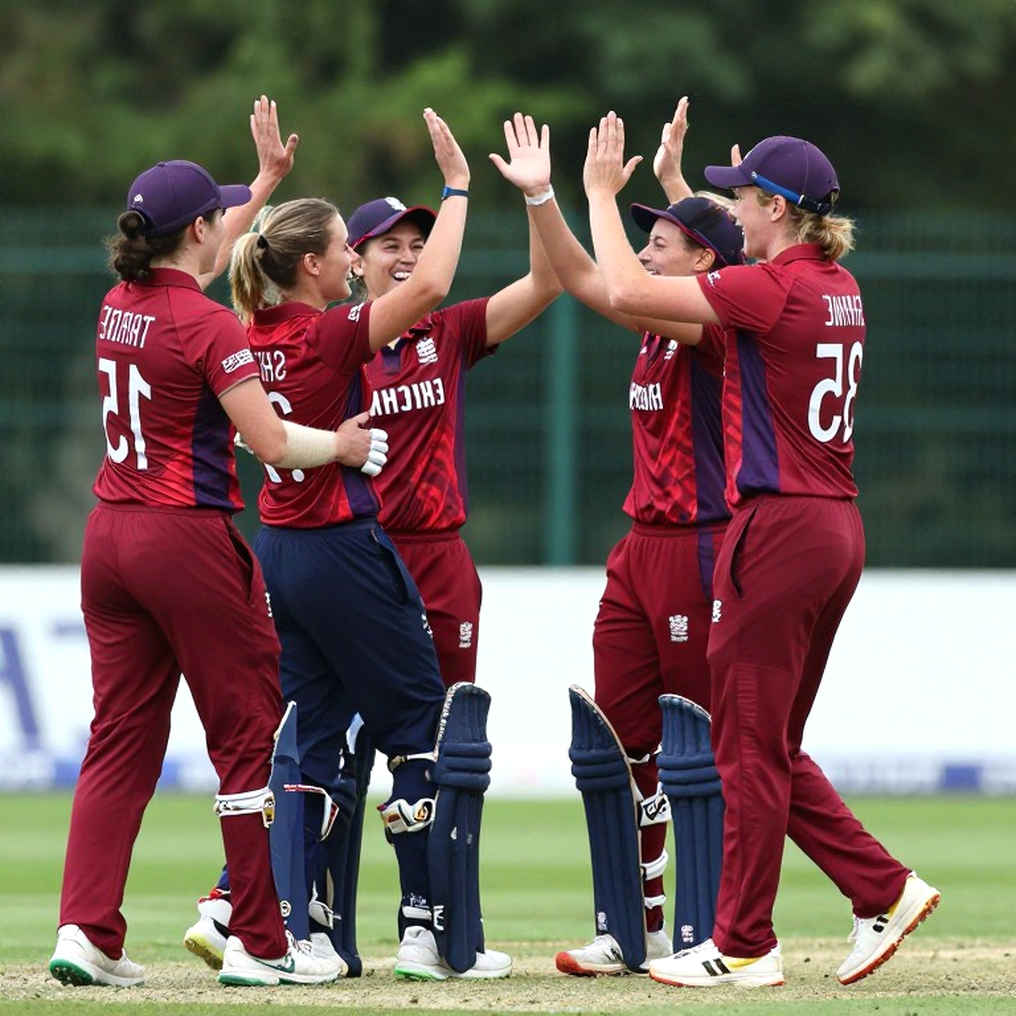
Solutions are being attempted. The first direction is stricter enforcement of the rule limiting Tests to four or five days, alongside tighter regulation of pitch quality so that matches finish faster and produce results for spectators. The second is the day-night Test, which solves the prime-time broadcast problem. In India the experiment began cautiously but is becoming a settled arrangement. The third is the revival of women's Test cricket, which has gathered remarkable momentum in recent years. Series such as India against Australia, and England against India, have shown that if broadcast and marketing are handled properly, people will watch five-day cricket.
Nor is there any need to treat franchise cricket as a threat. It has produced genuine improvements in the quality of the game. A young batter who was once confined to his domestic structure now gains experience of facing world-class bowlers through leagues. Fielding standards have risen, fitness norms have changed, and audiences have gained access to the sport. The IPL gave players from the West Indies, Afghanistan, Sri Lanka and Bangladesh a platform their national teams could never have provided. The rise of a player like Rashid Khan is the clearest example. The problem lies not in the leagues but in the absence of coordination.
What is particularly conspicuous is that the International Cricket Council has no binding and universal rules on player workload. Each board makes its own rules, and each board prioritises its own local interests. The result is that a player representing his country in all three formats plays far more matches in a year than his body can bear. Rising injury numbers are direct evidence. The problem is most acute for fast bowlers, whose load is far heavier than anyone else's.
There is another dimension that is often under-examined — the demographic shift in audiences. The traditional Test audience is ageing; new audiences are arriving mostly through the shorter formats. If that trend continues, Test cricket will not have the same audience base two decades from now that it has today. This is not merely a marketing problem; it is a change in how the sport is thought about. The young viewer of today wants three hours of excitement in a match, not five days of patience. That shift deserves respect, because no sport can run against the instincts of its audience.
One practical path might be to sell Test cricket in a new form — in a separate season, with dedicated incentives in central contracts, and confined to bilateral series where both boards are genuinely competitive. This does not mean excluding smaller nations; it means not pushing them into a second tier. In countries like Romania, Germany and the Netherlands the per-capita following for Test cricket may be small, but their presence matters to the sport's global identity.
As for the players themselves, figures such as Virat Kohli, Joe Root, Kane Williamson, Pat Cummins, Babar Azam, Kagiso Rabada, Jasprit Bumrah, Smriti Mandhana and Ellyse Perry stand at the centre of this debate, because their choices directly influence which format will be called the benchmark of prestige in the years ahead. When a top player steps away from a league to play a Test, that sends a message; when he chooses the league, that sends one too. The accumulation of those individual decisions will determine the cricket calendar of the future.
Finally, it is fair to say that Test cricket has no automatic right to be saved. Every format must justify its relevance. But it is also true that if Test cricket disappears, the sport will lose the laboratory in which its technique, its endurance and its storytelling were developed. T20 can be the economic engine, the Test match is the soul — and no profession's engine can substitute for its soul. The question is not whether Test cricket survives; it is whether boards, broadcasters and players have the nerve to sell it with the seriousness they bring to an IPL promo.
संबंधित खिलाड़ी
लोकप्रिय/पसंदीदा पुस्तकें
The Truth of the Empty Scoresheet: How Do You Analyse Cricket When There's No Data?2026-11-04
The Auction Ledger: Where the Real Selection Committee of Indian Cricket Sits2026-11-03
WTC 2027 Build-Up: Conrad's 'Right Seats' Formula, Ackerman and Breetzke Auditioned Across the Australia Series2026-11-03
Cricket's Shifting Centre: Leagues, Screens and the Limits of the Player2026-11-03
Six Names, Two Formats, One Decision: The Ashes Priority Buried in Australia's White-Ball Squad2026-11-02
Six Wickets for Three Runs and 21 Missing Names: Auditing Wisden's Quiz Ledger2026-11-02
अनुशंसित
The Empty Record: Why a Declared Null Result Is the Most Expensive Truth in Cricket Analytics2026-10-28
Bellerive, Day One: The 5-182 Silence, the 153-Run Stand, and Maddinson’s Catch2026-10-30
The Empty Payload in the Cricket Newsroom: When the Analysis Pipeline Has Nothing to Say2026-11-01
Sri Lanka Cricket Reform: The Column Nobody Read Is Where the ICC Verdict Sits2026-10-28
McCullum: England learned from Sri Lanka win as Brook's captaincy shines2026-10-31
No.1 on the line at Newlands, but Australia's press day left out the home-advantage ledger2026-10-30
अनुशंसित
England's 0-3 Audit: 429 and 241 Not Defended, McCullum's 'Lessons' and the Death-Overs Ledger2026-10-27
Wisden's Six-Wicket Puzzle: 24 Spells, 17 Clues, and a History Without Sources2026-11-02
From 5/4 to 221/7 in Sharjah: Afghanistan's Win Says Less About Its Hitters Than About Its Powerplay2026-10-30
England U19 in Pakistan: The Load-Management Map From Colombo to Rawalpindi2026-10-28
One Monday, Two Forms: Mohammad Amir's British Passport and the IPL's Three-Layer Wall2026-11-03
Franchise Cricket vs National Duty: Who Is Winning the War Over the Calendar?2026-11-01